
Throat Damper Replacement
A cracked or burned-out throat damper cut out of the smoke shelf and replaced with a new frame and plate.
Learn moreThe inspection level is chosen to the situation, not sold up: Level 1 for a visual check on an unchanged system, Level 2 with CCTV when you've bought, sold, or had an event, Level 3 when access has to be opened to reach a suspected defect. We assess liner, smoke chamber, crown, flashing, and clearances to combustibles against NFPA 211, photograph each finding, and grade it pass or fail. The deliverable is a written report you can hand to an insurer or buyer — measured findings, not an opinion.
Prices shown are starting estimates and may change with the condition, access, and scope we find on site. Only a written quote from an on-site visit is a price we commit to.
Modern UL-listed metal liner — required for gas conversions and damaged flues.
Drag the model to rotate — see exactly where this component lives in your chimney.
An inspection is the diagnostic the rest of chimney service depends on, and Texas Chimney Experts runs it to the letter of the standard that defines it. NFPA 211 sets Level 1 as the readily-accessible visual examination for a system in continuous service with no change in use: the chimney exterior, the accessible interior, and the appliance connection, confirmed against the code's criteria. We verify the structure is sound, the flue is clear of obstruction and combustible deposits, and the venting path is intact. It's the right annual scope for a system you've used the same way season after season — and the point at which a measured finding replaces a guess.
What separates our Level 1 from a checkbox walk-through is the component list the technician works against and records. We examine the crown for cracking and overhang, the cap and spark arrestor, the flashing seal at the roofline, the mortar joints and brick faces for spalling, the visible flue tiles, the smoke chamber and shelf, and the damper. We read draft and verify clearances to combustibles. Anything not readily accessible — by NFPA 211's own definition — triggers a documented recommendation to escalate to Level 2, because we don't sign off on what we couldn't see. Naming the limit of the exam is what makes the report it produces trustworthy.
You receive a written report with photographs of every component, a condition rating in plain language, and a prioritized findings list sorted into safe, monitor, and act-now. Separating genuine safety items from cosmetic ones is what lets you budget on evidence instead of fear. It's the identical inspection protocol our technicians run in every metro on our national map, which is why the report holds the same weight against a quiet annual check or a real-estate file. The standard of a premium inspection is simple: a report that holds up when an insurer, a buyer's agent, or a code official reads it.
Most of a Level 1's value is in the early catch the documentation makes possible — the hairline crown crack logged before it admits a winter of water, the first efflorescence marking a forming moisture path, a damper beginning to seize, a spark screen rusted thin. None is an emergency the day it's found; each becomes an expensive repair if it goes unseen for a season or two. A technician examining the same components against the same checklist every year builds a measured baseline for your specific chimney, so deterioration reads as a trend rather than a surprise. That continuity is the real product: not a one-time snapshot, but a record that compounds in value the longer your system stays under the same disciplined, documented eye.
A chimney inspection isn't a matter of opinion — it's held to published national standards. Texas Chimney builds every job to the named codes below and documents it, so the work is provably right for an inspector, an insurer, or a future buyer. These are the universal standards; your city's permit and inspection requirements are confirmed with the local authority before we pull the job.
Visual examination of the readily accessible portions: chimney exterior, accessible interior, and the appliance connection. This is the correct scope when a system stays in continuous service with no change in use, and it is the annual standard.
Builds on the visual exam with a video scope of the flue interior plus inspection of accessible attic and crawlspace passages. The standard requires this level after a property transfer, a fuel or appliance change, or a hazardous event such as a chimney fire, earthquake, or lightning strike.
Invasive by definition, this examination removes components or masonry to reach the area in question, and it is performed only when a Level 1 or 2 inspection suggests a concealed hazard no other method can evaluate.
One check the inspection always runs: the flue must end ≥3 ft above the roof penetration and ≥2 ft above anything within 10 ft, the height rule a smoking or back-drafting chimney most often fails.
Codes cited are the established national standards (NFPA, UL, IRC) that govern this service. The adopted code edition, permit, and inspection requirements vary by city —Texas Chimney verifies them with your local authority having jurisdiction on every job.
1-hour arrival window, with a text 30 minutes ahead carrying the tech's name and photo.
Full external + internal inspection with high-resolution photos.
Document code violations, structural defects, and any fire or water damage on camera.
Written report with prioritized recommendations — no pressure.
We've worked on 1,000+ DFW homes over 10+ years. Every job — small sweep or full rebuild — runs the same way: certified technicians, written quotes, photo reports, warranty in writing.
All three levels on hand — Level 1, Level 2 (video scope), and Level 3
Insurance- and real-estate-grade written reports with photos
CSIA-certified inspectors only — never subbed out
Free Level 1 inspection, with no obligation to buy anything
Family-owned, CSIA-certified, NFPA 211–compliant. We're the team you call when you want it done right the first time — no rotating subcontractors, no upsell pressure, no surprises. Same techs, same trucks, same standard.
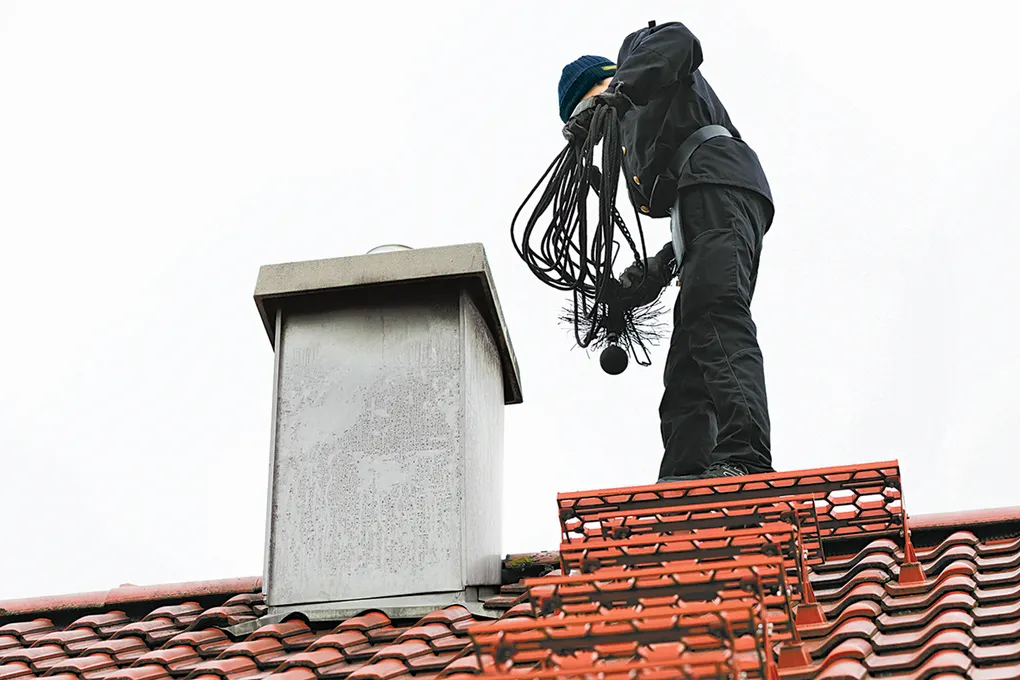
The standard is condition-driven, not calendar-driven: NFPA 211 ties cleaning to a measured 1/8" of creosote accumulation, and a Level 1 inspection is the way we confirm you've reached it. For a wood-burning fireplace in regular use that typically lands at once per heating season — but we measure the buildup and tell you what the flue actually shows rather than assuming.
Yes — and verifiably so. Our inspectors hold current CSIA (Chimney Safety Institute of America) certifications you can confirm yourself in the CSIA member directory at csia.org, and our fireplace work is handled by NFI specialists. We name the standard we inspect to so you can check the credential behind the report.
Yes. We respond 24/7 (subject to crew availability) to the situations that can't wait for a diagnosis later — an active water leak into the home, an animal trapped in the flue, post-fire hazards, and storm damage. We make the system safe first, then document the cause; same-day in most cases.
Always — and with the evidence attached. Before any work starts you receive a written quote backed by photos of exactly what we found and why it needs attention. Final pricing follows the documented condition of the chimney and anything the inspection turns up, not a number guessed before we've looked.
Flue Watch is our annual maintenance plan at $19.99/month ($240/year): a documented Level 1 inspection and sweep every year ($248 value), priority scheduling, 10% off all repairs, and emergency-response priority. It's the way to keep a year-over-year record of your system's condition. Cancel anytime, no contract.
Last reviewed:
Other services in the Inspection category.
Free written quote. Same-week scheduling. 24/7 emergency response when you need it.
Active leak, animal in flue, post-fire damage, or smoke event? Real humans on the line 7 AM to 12 AM every day — replies in under 2 minutes. Tech dispatch within 2 hours during business hours, subject to crew availability after-hours.
Emergency line