
Smoke Chamber Restoration
Open joints and exposed corbeling re-parged to a smooth NFPA 211 surface, documented.
Learn moreEvery sweep starts with a measurement, not a brush: we grade the deposit against the NFPA 211 Stage 1–3 scale so the clean is matched to what's actually in the flue. Soot and creosote come down through the smoke chamber and firebox under HEPA containment, and a Level 1 inspection runs alongside to flag any code clearance issue we can see. You leave with a clean flue, a photo record of before and after, and a written note of anything that needs attention — verification, not a promise.
Prices shown are starting estimates and may change with the condition, access, and scope we find on site. Only a written quote from an on-site visit is a price we commit to.
Stacked ceramic tiles channel smoke and protect the masonry from heat.
Drag the model to rotate — see exactly where this component lives in your chimney.
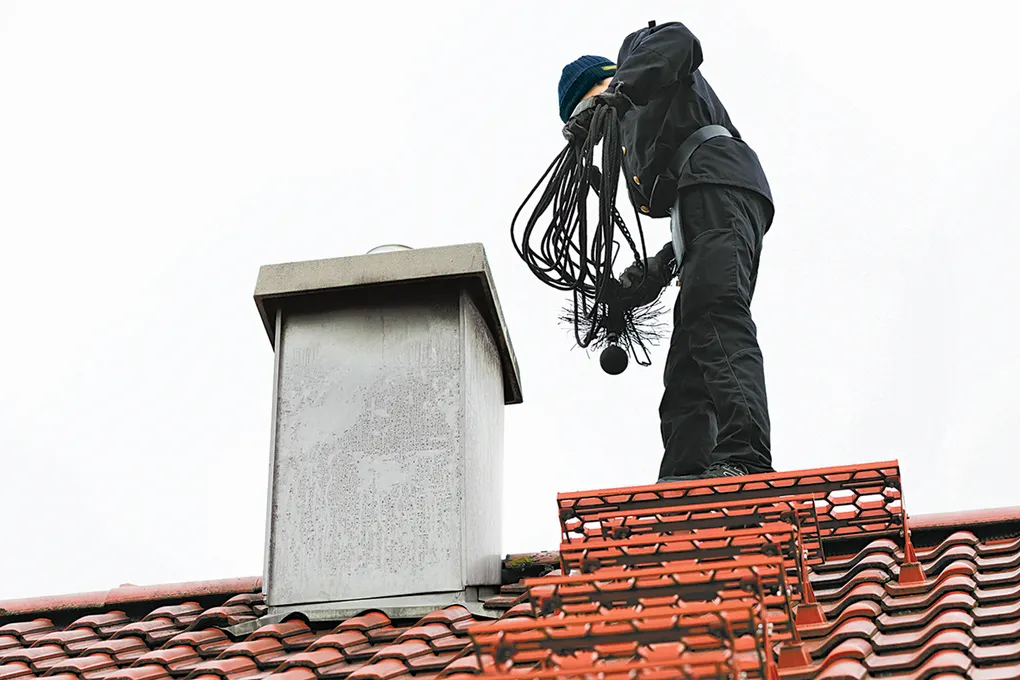
A Texas Chimney Experts sweep opens with a measurement, because the right service can't be chosen until the deposit is graded. NFPA 211 ties cleaning to a 1/8-inch creosote threshold and to three documented stages — Stage 1 (dusty soot) and Stage 2 (crunchy, flaky) being the loose buildup a brush is purpose-built to take down. We rate what's in the flue first, then clean the flue, smoke chamber, smoke shelf, and firebox to a verified-clear finish. That measure-then-clean sequence is the same in every market we serve, so the report behind a routine sweep means the same thing whether it documents a 1920s masonry stack or a builder-grade prefab in suburban Dallas.
The grading is also what tells us when a sweep is the wrong call. A brush takes down soft Stage 1–2 buildup; it slides straight over baked-on, glassy Stage-3 glaze and removes nothing. So the moment a rod-and-brush stops biting and meets a mirror-hard deposit, we stop, document it, and tell you it's a deep-cleaning (PCR) job — rather than rodding a flue we can't actually clean and billing it as a sweep that didn't work. We match the tool to the liner along the way (rod-and-brush on straight clay flue, a poly-head whip on stainless so the corrugations are never scored), but the discipline that keeps an annual sweep honest is knowing — and recording — exactly where routine cleaning ends.
Every sweep is paired with a Level 1 visual inspection at no extra charge, and the creosote stage we measure is logged so you build a year-over-year baseline of how your system burns. We document tile condition, the smoke shelf, damper operation, and the season's deposit volume, then hand you a written report with photos. If the buildup is heavier than a single season should produce — the signature of unseasoned wood, a cool-burning insert, or a draft fault — you get that finding with the evidence behind it, so the cause gets corrected and the next season runs cleaner. A documented condition check is what turns a cleaning into actual maintenance.
A complete sweep reaches what a quick brush never touches: soot trapped in 30- and 45-degree flue offsets where a brush loses wall contact, the smoke shelf behind the damper that catches debris and reverses downdraft, and the firebox and damper assembly. We recommend the sweep annually for wood-burning systems, and more often for heavy users and anyone burning unseasoned wood — because soft creosote left a season too long is precisely what re-bakes into the Stage-3 glaze that needs the heavier PCR intervention. Booking before the first cold snap means you light your first fire on a flue that's been measured, cleaned, and verified, not one you're hoping is still clear.
At Texas Chimney Experts, a chimney sweep is never guesswork. We scope every job from a graded, photographed inspection first — the NFPA 211 level the evidence calls for — so the work is matched to what your flue and masonry actually need, with the report to prove it. The documented inspection is the record the chimney sweep is built on.
Chimney inspectionA chimney sweep isn't a matter of opinion — it's held to published national standards. Texas Chimney builds every job to the named codes below and documents it, so the work is provably right for an inspector, an insurer, or a future buyer. These are the universal standards; your city's permit and inspection requirements are confirmed with the local authority before we pull the job.
Sweep the flue when creosote or soot builds to roughly 1/8 inch, the accumulation at which a chimney fire can sustain itself. In a wood fireplace that gets regular use, that threshold arrives at about once a year, the interval a routine sweep schedule is designed around.
Under NFPA 211 the chimney and venting system gets at least a Level 1 inspection every year. Run alongside the sweep, that inspection is what verifies a routine cleaning really is all the system requires, and it catches the year when routine stops being enough.
Codes cited are the established national standards (NFPA, UL, IRC) that govern this service. The adopted code edition, permit, and inspection requirements vary by city —Texas Chimney verifies them with your local authority having jurisdiction on every job.
Level 1 visual exam + creosote-stage rating against the NFPA 211 threshold, so the right service is chosen before any brushing.
Drop cloths down, dual-stage HEPA vacuum staged at the opening, hearth sealed off before any tool touches the flue.
Flue, smoke chamber, smoke shelf, and firebox brushed to a verified-clear finish.
Photo report with the recorded stage; if Stage-3 glaze turns up, we flag deep cleaning rather than bill a sweep that can't clear it.
We've worked on 1,000+ DFW homes over 10+ years. Every job — small sweep or full rebuild — runs the same way: certified technicians, written quotes, photo reports, warranty in writing.
CSIA-certified sweep techs you can confirm yourself in the CSIA directory
Brush-and-rod cleaning sized to routine Stage 1–2 buildup
HEPA vacuum + drop cloths — your floors stay spotless
Every sweep comes with a Level 1 inspection and a documented creosote-stage rating
Family-owned, CSIA-certified, NFPA 211–compliant. We're the team you call when you want it done right the first time — no rotating subcontractors, no upsell pressure, no surprises. Same techs, same trucks, same standard.
The standard is condition-driven, not calendar-driven: NFPA 211 ties cleaning to a measured 1/8" of creosote accumulation, and a Level 1 inspection is the way we confirm you've reached it. For a wood-burning fireplace in regular use that typically lands at once per heating season — but we measure the buildup and tell you what the flue actually shows rather than assuming.
Yes — and verifiably so. Our inspectors hold current CSIA (Chimney Safety Institute of America) certifications you can confirm yourself in the CSIA member directory at csia.org, and our fireplace work is handled by NFI specialists. We name the standard we inspect to so you can check the credential behind the report.
Yes. We respond 24/7 (subject to crew availability) to the situations that can't wait for a diagnosis later — an active water leak into the home, an animal trapped in the flue, post-fire hazards, and storm damage. We make the system safe first, then document the cause; same-day in most cases.
Always — and with the evidence attached. Before any work starts you receive a written quote backed by photos of exactly what we found and why it needs attention. Final pricing follows the documented condition of the chimney and anything the inspection turns up, not a number guessed before we've looked.
Flue Watch is our annual maintenance plan at $19.99/month ($240/year): a documented Level 1 inspection and sweep every year ($248 value), priority scheduling, 10% off all repairs, and emergency-response priority. It's the way to keep a year-over-year record of your system's condition. Cancel anytime, no contract.
Last reviewed:
Other services in the Cleaning category.
Free written quote. Same-week scheduling. 24/7 emergency response when you need it.
Active leak, animal in flue, post-fire damage, or smoke event? Real humans on the line 7 AM to 12 AM every day — replies in under 2 minutes. Tech dispatch within 2 hours during business hours, subject to crew availability after-hours.
Emergency line