
Meta | Texas Chimney Experts
Texas Chimney Experts — DFW chimney & fireplace specialists. Free inspection, written quote, no surprise fees.
Meta
Title (60ch): How Often Should You Sweep Your Chimney? | TCE Dallas Description (150ch): NFPA recommends a chimney sweep at least once a year. Here’s what frequency really depends on, and how to know when yours needs attention.—
How Often Should You Sweep Your Chimney?
*By Marcus Rivera, CSIA Certified Chimney Sweep — Updated May 8, 2026*
If you have a fireplace, wood stove, or any vented appliance, the question comes up every fall: *Do I really need to get this swept again?* The honest answer depends on how much you burn, what you burn, and how the chimney is built. This guide walks through the standard recommendation, the real-world variables, and the warning signs that tell you it’s time — even if you swept last year.
TL;DR — The quick answer
The National Fire Protection Association (NFPA 211) recommends that all chimneys, fireplaces, and vents be inspected at least once a year for soundness, deposits, and clearances, and cleaned as needed. For most DFW homeowners who burn a normal amount of wood (15–30 fires per season), that means one sweep and inspection per year, scheduled in late summer or early fall before burn season. Heavy burners, gas-log conversions, and homes with smoky drafts often need more frequent attention.
The NFPA standard, plain English
NFPA 211 is the industry rulebook chimney sweeps work from. Section 14.1 of the standard says chimneys should be inspected annually, and cleaned, repaired, or relined whenever the inspection finds a problem. The CSIA — Chimney Safety Institute of America — translates that into a simple rule for homeowners: once a year, every year, regardless of how often you use it.
The reason annual inspection matters even for a chimney that’s barely used: animals, weather damage, and slow water intrusion don’t care whether you lit a fire last winter. Birds nest in unused flues. Crowns crack from freeze-thaw cycles. Caps blow off in storms. An annual look catches all of this before it becomes a fire or carbon monoxide problem.
What changes the frequency
Not every chimney is on the same schedule. The variables that push the timing tighter:
How much you burn
- **0–10 fires per year (occasional)**: annual sweep is plenty
- **10–40 fires per year (typical)**: annual sweep, scheduled before fall
- **40+ fires per year or daily wood-stove use**: consider mid-season check, especially after January
What you burn
- **Seasoned hardwood (oak, hickory, pecan)**: cleanest burn, normal creosote rate
- **Softwoods (pine, cedar)**: faster creosote buildup, sweep more often
- **Unseasoned or wet wood**: dramatically faster creosote buildup — can require a sweep mid-season
The chimney itself
- **Masonry chimney with clay tile liner**: standard
- **Pre-fab metal chimney**: often needs more attention to caps and chase covers
- **Gas-log conversion in a wood firebox**: still needs annual inspection — gas leaves acidic moisture residue that corrodes flues
- **Wood stove with stainless steel liner**: typically clean-burning, but sweep annually
Comparison: Sweep schedules by use
| Use pattern | Recommended sweep frequency | Inspection level |
|—|—|—|
| Decorative only (rare use) | Annual | Level 1 |
| 10–30 fires/year (typical DFW) | Annual | Level 1 |
| 30–60 fires/year (heavy) | Annual + mid-season check | Level 1 |
| Daily wood stove | Twice yearly | Level 1 each |
| Gas logs in wood firebox | Annual | Level 1 |
| After chimney fire | Immediate | Level 2 |
| Real estate transaction | At sale | Level 2 |
| New home, never inspected | Before first use | Level 2 |
Signs you need a sweep before the year is up
Even on a regular schedule, these signs say *call now*:
- Smoke spilling into the room when you start a fire
- A strong smoky odor from the firebox in summer when humidity rises
- Visible soot or creosote flakes on the smoke shelf or damper
- Animal sounds (scratching, chirping) from the flue
- Water staining on the firebox or surrounding masonry
- A cap that has blown off or visibly damaged
- The 1/8-inch rule: if you see more than 1/8″ of creosote buildup, sweep before the next fire
What a sweep actually does
A full CSIA-standard sweep is more than a brush down the flue. It includes:
1. Drop cloths and HEPA-vacuum protection of the firebox and surrounding floor
2. Mechanical brushing of the flue from top, bottom, or both depending on access
3. Inspection of the smoke shelf, smoke chamber, damper, and firebox
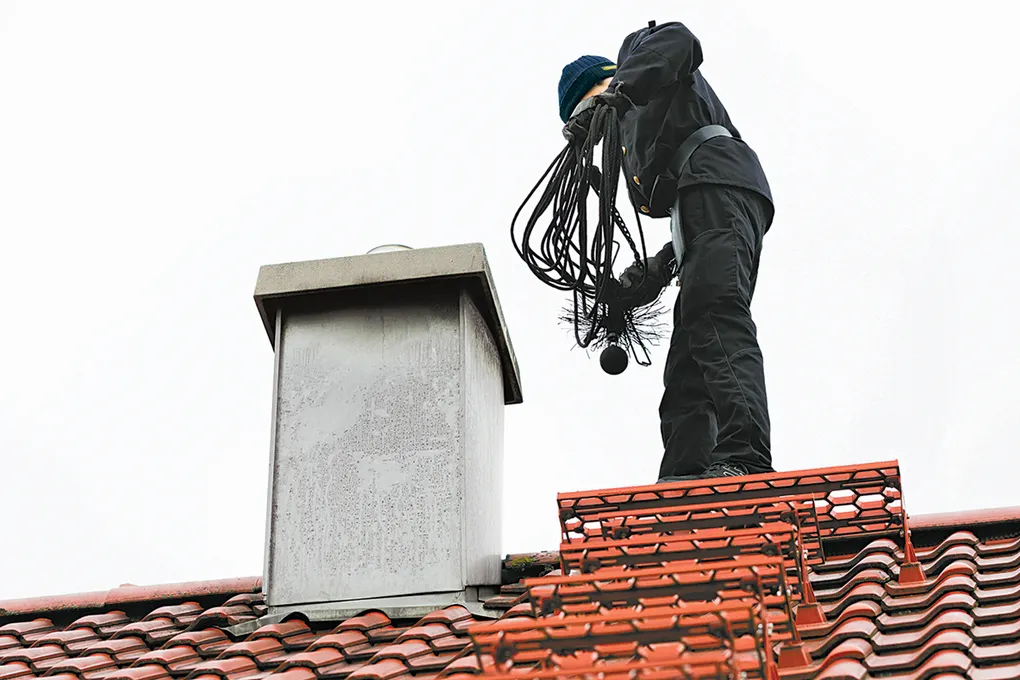
4. Visual inspection of cap, crown, and flashing from the roof
5. A written Level 1 inspection report flagging any concerns
A sweep is not the same as an inspection. A sweep is the cleaning work; the inspection is the diagnostic. A reputable company does both on the same visit.
When to call us
If it’s been more than 12 months since your last sweep, if you’re moving into a home and don’t know its history, or if you’ve noticed any of the warning signs above — it’s time to schedule. We work across the Dallas-Fort Worth metro and can typically book within a week outside of peak fall season.
Annual sweeps in late summer (July through September) are easier to schedule and avoid the October–December rush, when wait times can stretch to three or four weeks.
Call 214-444-8103 to schedule your annual sweep and inspection, or to ask whether your usage pattern justifies more frequent service.
FAQ
Does a gas fireplace need to be swept?Yes — annually. Gas combustion produces water vapor and acidic byproducts that corrode flue tiles and metal liners over time. Gas logs in a wood firebox especially need annual inspection.
Can I sweep my own chimney?You can brush a flue yourself with a kit, but you cannot perform a competent inspection without training. Most DIY sweeps miss flue-tile cracks, smoke-chamber buildup, and crown damage. The cost of a professional sweep is far less than the cost of missing a structural problem.
How long does a sweep take?A typical residential sweep with Level 1 inspection takes 45–90 minutes. Heavily soiled flues or homes requiring roof access in difficult weather can take longer.
What does a sweep cost in DFW?Standard pricing in the Dallas-Fort Worth metro runs $189–$–+ for a single-flue sweep with Level 1 inspection. Multi-flue homes, severe creosote buildup, or required Level 2 inspections cost more.
What if I haven’t used my fireplace in years?Schedule a Level 2 inspection">Level 2 inspection before the next use. Long-dormant chimneys often have animal nests, deteriorated flue tiles, or compromised caps that need addressing before you light the first fire.
Do you offer same-week service?Yes, outside of October–December peak season. During the peak, plan three to four weeks ahead.
Is creosote really that dangerous?Yes. Stage 3 creosote (the hard, glassy kind) ignites at around 1,100°F and can sustain a chimney fire that reaches 2,000°F — hot enough to crack flue tiles and ignite the framing around the chimney.
Schedule your annual sweep
Book online or call 214-444-8103. We service the entire DFW metro, work with all chimney types, and back our work with a clear written inspection report.
—
Internal links
- [Chimney Sweep Service](https://texaschimneyexperts.com/chimney-sweep-dallas/)
- [Chimney Inspection Levels Explained](https://texaschimneyexperts.com/learn/chimney-inspection-levels-explained/)
- [What is Creosote and Chimney Fire Risk](https://texaschimneyexperts.com/learn/what-is-creosote-chimney-fire-risk/)
- [CSIA Certification — Why It Matters](https://texaschimneyexperts.com/learn/csia-certification-why-it-matters/)
- [Dallas Service Area](https://texaschimneyexperts.com/dallas/)
—
JSON-LD
“`json
{
“@context”: “https://schema.org”,
“@graph”: [
{
“@type”: “Article”,
“headline”: “How Often Should You Sweep Your Chimney?”,
“author”: {“@type”: “Person”, “name”: “Marcus Rivera”, “jobTitle”: “CSIA Certified Chimney Sweep”},
“publisher”: {“@type”: “Organization”, “name”: “Texas Chimney Experts”, “telephone”: “☎ 214-444-8103”},
“datePublished”: “2026-05-08”,
“dateModified”: “2026-05-08”,
“mainEntityOfPage”: “https://texaschimneyexperts.com/learn/how-often-sweep-chimney/”
},
{
“@type”: “FAQPage”,
“mainEntity”: [
{“@type”: “Question”, “name”: “Does a gas fireplace need to be swept?”, “acceptedAnswer”: {“@type”: “Answer”, “text”: “Yes — annually. Gas combustion produces water vapor and acidic byproducts that corrode flue tiles and metal liners over time.”}},
{“@type”: “Question”, “name”: “Can I sweep my own chimney?”, “acceptedAnswer”: {“@type”: “Answer”, “text”: “You can brush a flue yourself, but you cannot perform a competent inspection without training. Most DIY sweeps miss flue-tile cracks and crown damage.”}},
{“@type”: “Question”, “name”: “How long does a sweep take?”, “acceptedAnswer”: {“@type”: “Answer”, “text”: “A typical residential sweep with Level 1 inspection takes 45–90 minutes.”}},
{“@type”: “Question”, “name”: “What does a sweep cost in DFW?”, “acceptedAnswer”: {“@type”: “Answer”, “text”: “Standard pricing runs $189–$–+ for a single-flue sweep with Level 1 inspection.”}},
{“@type”: “Question”, “name”: “Is creosote dangerous?”, “acceptedAnswer”: {“@type”: “Answer”, “text”: “Yes. Stage 3 creosote ignites at around 1,100°F and can sustain a chimney fire reaching 2,000°F.”}}
]
},
{
“@type”: “BreadcrumbList”,
“itemListElement”: [
{“@type”: “ListItem”, “position”: 1, “name”: “Home”, “item”: “https://texaschimneyexperts.com/”},
{“@type”: “ListItem”, “position”: 2, “name”: “Learn”, “item”: “https://texaschimneyexperts.com/learn/”},
{“@type”: “ListItem”, “position”: 3, “name”: “How Often to Sweep a Chimney”, “item”: “https://texaschimneyexperts.com/learn/how-often-sweep-chimney/”}
]
}
]
}
“`
Our Sister Companies — Specialists in Related Services
Texas Service Experts is part of a network of CSIA-certified chimney specialists. Depending on your specific need:
- Texas Service Experts — general chimney sweep/inspection