
Chimney Asbestos & Lead Abatement
Licensed asbestos and lead abatement under negative-air containment, cleared by lab sampling.
Learn moreAn open masonry fireplace is a net energy loss — it radiates a little heat while pulling far more conditioned air up the chimney. We convert it to a sealed, high-efficiency gas or wood insert sized to the room and fuel, with a full-length, correctly-sized liner and a positive (continuous) connection to the cap so it vents and drafts to spec — never a 'slammer' jammed in the opening, which is the code shortcut that traps combustion products. The install is permitted, the gas connection leak-tested, and the run documented to the listing.
Prices shown are starting estimates and may change with the condition, access, and scope we find on site. Only a written quote from an on-site visit is a price we commit to.
An open masonry fireplace is, thermodynamically, a net loss — it radiates a little heat into the room while pulling far more conditioned air up the chimney. Converting it to a sealed, high-efficiency insert flips that equation: the same fireplace becomes a genuine heat source that warms the room and stops bleeding your energy. Insert conversions are performed to a documented standard — correctly sized appliance, fully lined positive-connection venting, and a finished install that performs as the manufacturer intended.
The reason an open fireplace loses is simple: it's open. Combustion air and a huge volume of room air go up the flue, and most of a wood fire's heat goes with it. A high-efficiency gas or wood insert is a sealed firebox that fits into the existing opening, drawing controlled combustion air and radiating and circulating far more of its heat into the room. EPA-certified inserts reach efficiencies an open fire can't approach — but the appliance only delivers that when it's installed correctly.
The make-or-break detail is the liner. An insert must connect to a full-length, correctly sized liner running from the appliance outlet straight to the cap — a positive (continuous) connection — so it vents safely and drafts as designed. A 'slammer' install that just sets the insert in the opening without a connected liner spills combustion products and never performs to spec. An insulated stainless liner sized to the insert is run, the positive connection made, and the top terminated properly.
The appliance is sized and selected to the space and the fuel, not to whatever's in stock. A gas insert gets its connection made and leak-tested; a wood insert gets its firebox and liner matched and its clearances verified. Then the surround is finished so the insert looks integrated — a flush, intentional install, not an appliance jammed into a hole. The payoff is comfort and economy together: lower utility load, real warmth, and on wood inserts the ability to heat through an outage. The permit and inspection are handled and the venting and any gas test documented.
At Texas Chimney Experts, a open-fireplace to insert conversion is never guesswork. We scope every job from a graded, photographed inspection first — the NFPA 211 level the evidence calls for — so the work is matched to what your flue and masonry actually need, with the report to prove it. The documented inspection is the record the open-fireplace to insert conversion is built on.
Chimney inspectionA open-fireplace to insert conversion isn't a matter of opinion — it's held to published national standards. Texas Chimney builds every job to the named codes below and documents it, so the work is provably right for an inspector, an insurer, or a future buyer. These are the universal standards; your city's permit and inspection requirements are confirmed with the local authority before we pull the job.
Every insert vents through a full-length, correctly-sized liner with a positive (continuous) connection from the appliance collar to the cap; a 'slammer' install dropped into an open flue spills combustion products and fails code.
Liner sizing follows NFPA 211 and the manufacturer's listing for the specific insert, because that match is what lets the appliance draft and perform as designed.
For a gas insert, the connection is made and leak-tested before commissioning, and the test result is documented.
Codes cited are the established national standards (NFPA, UL, IRC) that govern this service. The adopted code edition, permit, and inspection requirements vary by city —Texas Chimney verifies them with your local authority having jurisdiction on every job.
Verify the flue and opening, then size and match an EPA/high-efficiency insert to your room and fuel.
Run an insulated stainless liner sized to the insert, connected positively to the cap.
Set the insert, then make and leak-test the gas connection or confirm the wood clearances.
Finish the surround flush, confirm draft, and document the venting and any gas test before we inspect.
We've worked on 1,000+ DFW homes over 10+ years. Every job — small sweep or full rebuild — runs the same way: certified technicians, written quotes, photo reports, warranty in writing.
An insert sized to your room and your fuel, not to whatever the supplier has on the shelf
A fully insulated liner tied positively to the cap, never a 'slammer' left disconnected
Gas connections made and leak-tested; wood clearances verified
A flush built-in surround that is permitted, inspected, and documented
Family-owned, CSIA-certified, NFPA 211–compliant. We're the team you call when you want it done right the first time — no rotating subcontractors, no upsell pressure, no surprises. Same techs, same trucks, same standard.
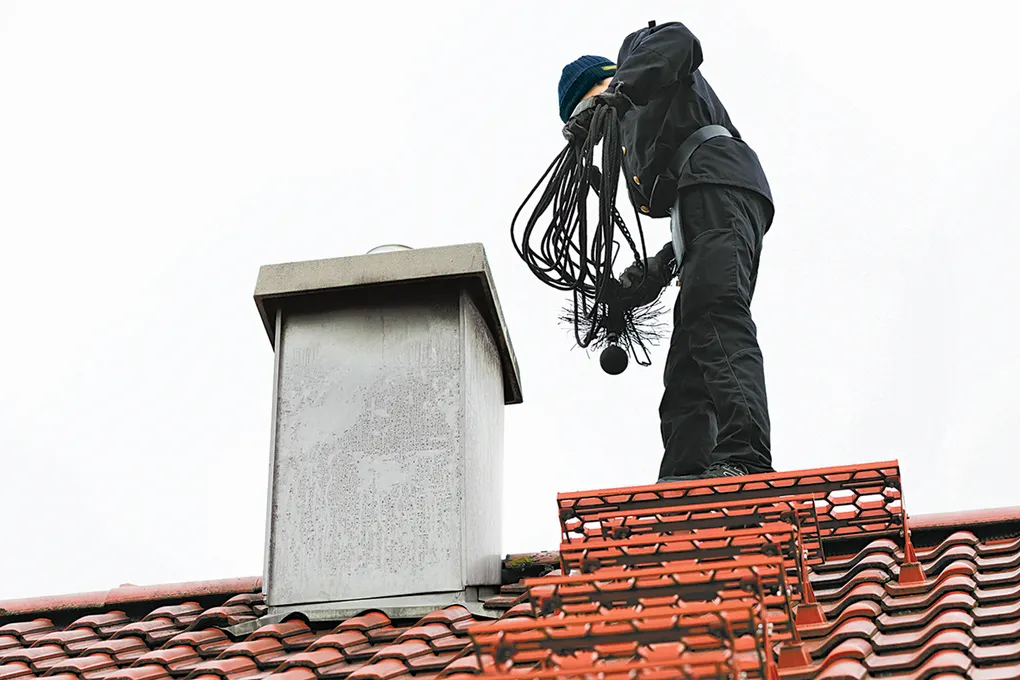
The standard is condition-driven, not calendar-driven: NFPA 211 ties cleaning to a measured 1/8" of creosote accumulation, and a Level 1 inspection is the way we confirm you've reached it. For a wood-burning fireplace in regular use that typically lands at once per heating season — but we measure the buildup and tell you what the flue actually shows rather than assuming.
Yes — and verifiably so. Our inspectors hold current CSIA (Chimney Safety Institute of America) certifications you can confirm yourself in the CSIA member directory at csia.org, and our fireplace work is handled by NFI specialists. We name the standard we inspect to so you can check the credential behind the report.
Yes. We respond 24/7 (subject to crew availability) to the situations that can't wait for a diagnosis later — an active water leak into the home, an animal trapped in the flue, post-fire hazards, and storm damage. We make the system safe first, then document the cause; same-day in most cases.
Always — and with the evidence attached. Before any work starts you receive a written quote backed by photos of exactly what we found and why it needs attention. Final pricing follows the documented condition of the chimney and anything the inspection turns up, not a number guessed before we've looked.
Flue Watch is our annual maintenance plan at $19.99/month ($240/year): a documented Level 1 inspection and sweep every year ($248 value), priority scheduling, 10% off all repairs, and emergency-response priority. It's the way to keep a year-over-year record of your system's condition. Cancel anytime, no contract.
Last reviewed:
Other services in the Remediation & Remodel category.
Free written quote. Same-week scheduling. 24/7 emergency response when you need it.
Active leak, animal in flue, post-fire damage, or smoke event? Real humans on the line 7 AM to 12 AM every day — replies in under 2 minutes. Tech dispatch within 2 hours during business hours, subject to crew availability after-hours.
Emergency line