
Carbon Monoxide Diagnosis & Combustion Safety
Instrument-measured CO, O2, draft, and worst-case spillage — diagnosed by the numbers, then re-verified.
Learn moreSome chimney hazards can't be swept away — cement-asbestos (transite) flue pipe, asbestos millboard, and pre-1978 lead paint all release dangerous fibers the moment an ordinary repair disturbs them, so the material has to be identified and contained before any teardown. Abatement runs under full poly containment with negative-air HEPA control, EPA RRP lead handling, and manifested disposal. The verification is independent: post-abatement air or wipe clearance sampling has to pass before the chimney work proceeds — lab numbers, not an assurance.
Prices shown are starting estimates and may change with the condition, access, and scope we find on site. Only a written quote from an on-site visit is a price we commit to.
Some chimney hazards can't be swept away — they have to be abated. Cement-asbestos (transite) flue pipe, asbestos millboard and firestop around old penetrations, and lead paint on a pre-1978 mantel or hearth release dangerous fibers and dust the moment they're disturbed by an ordinary repair. These are handled the only acceptable way: licensed abatement under full containment, with negative-air HEPA control, air-clearance testing, and the manifest documentation that proves the home is safe afterward.
The danger of asbestos transite is that it looks like harmless gray pipe. A typical contractor cuts it, breaks it, or pulls it during a reline and aerosolizes asbestos fibers into the home — an exposure the family may not feel for decades. Suspect transite or millboard is never disturbed by a standard crew. Instead, poly containment is built around the work area, negative-air HEPA scrubbers run so no fibers escape, the material wetted to suppress dust, and it's removed as licensed abatement requires. After removal, air-clearance sampling verifies the space is clean before containment comes down, then the debris is bagged, manifested, and disposed through a licensed waste stream.
Lead is the same discipline in a different material. Pre-1978 mantels, surrounds, and painted brick frequently carry lead paint, and grinding, stripping, or even heavy sanding without controls spreads lead dust through the house. The work follows the EPA RRP rule: contain the area, use HEPA-equipped tools, and finish with clearance wipe sampling to confirm lead-dust levels are within limits before the area is called clean. For families with young children, this is not a corner to cut.
What you're really buying in abatement is proof and protection. A cheap crew's 'we got rid of it' is worthless if fibers or dust were released in the process. The deliverable is a documented, tested-clean result: the containment setup, the clearance air or wipe samples, and the disposal manifest — the package your insurer, a future buyer's inspector, and the AHJ will require. Abatement precedes whatever repair or removal prompted it, and the work is sequenced so you're not paying for re-mobilization.
At Texas Chimney Experts, a chimney asbestos & lead abatement is never guesswork. We scope every job from a graded, photographed inspection first — the NFPA 211 level the evidence calls for — so the work is matched to what your flue and masonry actually need, with the report to prove it. The documented inspection is the record the chimney asbestos & lead abatement is built on.
Chimney inspectionA chimney asbestos & lead abatement isn't a matter of opinion — it's held to published national standards. Texas Chimney builds every job to the named codes below and documents it, so the work is provably right for an inspector, an insurer, or a future buyer. These are the universal standards; your city's permit and inspection requirements are confirmed with the local authority before we pull the job.
Any pre-1978 lead-paint work runs under the EPA Renovation, Repair and Painting rule: the area is contained, tools are HEPA-equipped, and clearance wipe sampling confirms lead-dust levels sit within limits before we call it done.
A standard repair crew never touches asbestos transite or millboard; removal happens under licensed abatement, with poly containment, negative-air HEPA, wet methods, and air-clearance testing to prove the space is clean.
Once abated, the material is bagged into a licensed hazardous-waste stream, and a disposal manifest records the chain of custody in writing.
Codes cited are the established national standards (NFPA, UL, IRC) that govern this service. The adopted code edition, permit, and inspection requirements vary by city —Texas Chimney verifies them with your local authority having jurisdiction on every job.
Treat suspect material as hazardous until it is tested; stand up poly containment with negative-air HEPA.
Dust gets suppressed by wetting the material first; removal then proceeds under licensed abatement protocol (EPA RRP for lead).
Run post-abatement air or wipe clearance sampling to confirm the space is genuinely clean before anyone reoccupies it.
Bag it, manifest it, and dispose through a licensed waste stream, then hand over the complete documentation package.
We've worked on 1,000+ DFW homes over 10+ years. Every job — small sweep or full rebuild — runs the same way: certified technicians, written quotes, photo reports, warranty in writing.
Licensed abatement run under full poly containment with negative-air HEPA scrubbing
Suspect material taken out wet, never dry-cut by a standard crew
Post-abatement air/wipe clearance sampling before containment comes down
Waste bagged and manifested out through a licensed stream, full paperwork included
Family-owned, CSIA-certified, NFPA 211–compliant. We're the team you call when you want it done right the first time — no rotating subcontractors, no upsell pressure, no surprises. Same techs, same trucks, same standard.
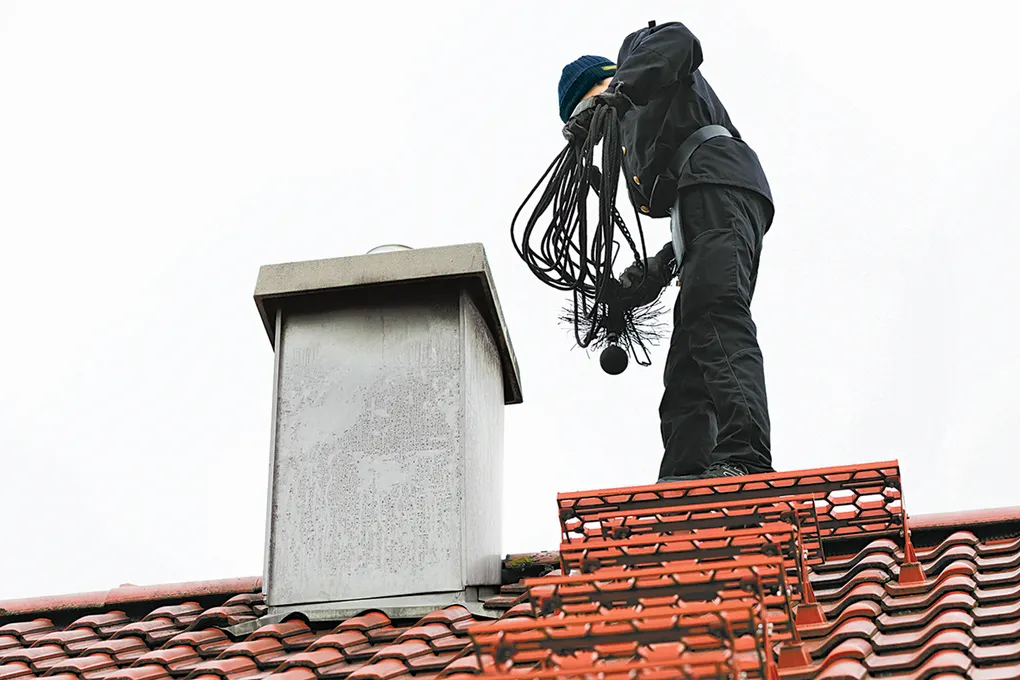
The standard is condition-driven, not calendar-driven: NFPA 211 ties cleaning to a measured 1/8" of creosote accumulation, and a Level 1 inspection is the way we confirm you've reached it. For a wood-burning fireplace in regular use that typically lands at once per heating season — but we measure the buildup and tell you what the flue actually shows rather than assuming.
Yes — and verifiably so. Our inspectors hold current CSIA (Chimney Safety Institute of America) certifications you can confirm yourself in the CSIA member directory at csia.org, and our fireplace work is handled by NFI specialists. We name the standard we inspect to so you can check the credential behind the report.
Yes. We respond 24/7 (subject to crew availability) to the situations that can't wait for a diagnosis later — an active water leak into the home, an animal trapped in the flue, post-fire hazards, and storm damage. We make the system safe first, then document the cause; same-day in most cases.
Always — and with the evidence attached. Before any work starts you receive a written quote backed by photos of exactly what we found and why it needs attention. Final pricing follows the documented condition of the chimney and anything the inspection turns up, not a number guessed before we've looked.
Flue Watch is our annual maintenance plan at $19.99/month ($240/year): a documented Level 1 inspection and sweep every year ($248 value), priority scheduling, 10% off all repairs, and emergency-response priority. It's the way to keep a year-over-year record of your system's condition. Cancel anytime, no contract.
Last reviewed:
Other services in the Remediation & Remodel category.
Free written quote. Same-week scheduling. 24/7 emergency response when you need it.
Active leak, animal in flue, post-fire damage, or smoke event? Real humans on the line 7 AM to 12 AM every day — replies in under 2 minutes. Tech dispatch within 2 hours during business hours, subject to crew availability after-hours.
Emergency line