
Chimney Sweep
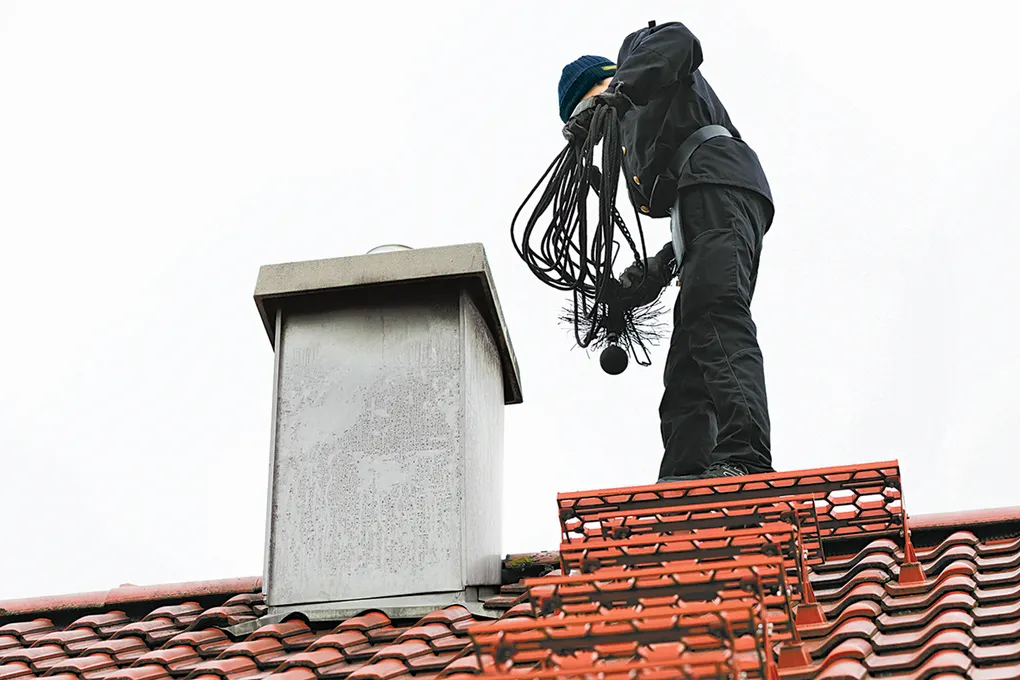
Creosote graded to NFPA 211 Stage 1–3, then swept clean and documented with photos.
Learn moreA lint-clogged dryer vent is a leading house-fire cause, which is why NFPA 211 calls for an annual clean — the standard, not a suggestion. We disconnect, brush, and HEPA-vacuum the full run, reconnect with a new clamp, and inspect the line and termination for the defects that drive the fire risk: crushed runs, flex foil, lint-blocked dampers. The cleared run lowers fire risk and dry times, and the inspection flags anything that needs correction.
Prices shown are starting estimates and may change with the condition, access, and scope we find on site. Only a written quote from an on-site visit is a price we commit to.
A dryer vent looks like the simplest thing in the house, and that's exactly why most of them are cleaned badly. A leaf-blower jammed into the wall cap, a quick rod-and-run, a "looks clear" at the door — that's the industry standard, and Texas Chimney Experts built its reputation refusing it. Dryer vents get cleaned the way we clean six-figure chimney systems: scoped, measured, documented, and proven. The same crews and the same exacting standard, in metros from the Texas Gulf to the Pacific Northwest.
Here's what compacted lint actually does, measured rather than assumed. It chokes the exhaust, so the dryer runs two and three cycles to finish one load, baking the heating element and shortening the life of an appliance you paid real money for. It traps the moisture that should be leaving the house, so it backs up as humidity into a laundry room and feeds mildew. And — the part nobody likes to say out loud — superheated lint behind a stalled airflow is a leading cause of residential fire. The U.S. Fire Administration ties roughly 2,900 home fires a year to clothes dryers, with failure to clean the number-one factor. The premium standard here isn't luxury; it's the margin between a clean run and a claim.
The process is deliberate and measured. The system is opened at both ends, the appliance pulled, and a counter-rotating rotary brush run with simultaneous air-whip through the full duct — transition, in-wall run, every elbow, and the exterior or roof termination. A HEPA-filtered vacuum captures the debris instead of blowing it into your living space. A long, multi-elbow, or roof-terminated run is treated as the harder job it is rather than pretended the easy method reaches it. Then it's measured: an anemometer reading on the exhaust before and after, so the result isn't an opinion, it's a number you keep.
What sets the TCE job apart is the documented finish. The dryer is re-seated tight to the wall without crushing the transition, a kinked foil hose replaced with code-compliant semi-rigid aluminum where one's found, the exterior damper confirmed to open fully on airflow and seal when off, and the termination left guarded against birds and rodents. You get a written airflow certificate and before/after photo documentation — the kind of record a discerning homeowner, a property manager, or an insurer actually respects.
This hub also spans the heavier cousins of a standard clean for clients who need them: deep cleaning of packed, long, or roof-run ducts; rooftop dryer vent cleaning from the jack down; lint-trap and blower-housing cleaning inside the dryer cabinet where fine lint bypasses the screen; commercial, laundromat, and multi-unit stacked-riser exhaust cleaning; and emergency same-day clearing of a fully blocked vent throwing no-dry or overheat faults. Whatever the configuration, the measured standard is identical.
Because TCE is a national brand, you get one craftsmanship benchmark whether you're in Dallas, Denver, or Charlotte — not the luck of the draw on a local subcontractor. We schedule tight windows, arrive in branded vehicles, protect the floors, and clean up completely. The premium isn't in the price tag; it's in the airflow number we hand you and the fact that you don't think about this vent again until the next scheduled service.
Check the full duct run and exterior vent.
Power-brush + vacuum lint from every elbow.
Confirm airflow meets spec at the exterior.
Note any crushed/long runs that need correction.
We've worked on 1,000+ DFW homes over 10+ years. Every job — small sweep or full rebuild — runs the same way: certified technicians, written quotes, photo reports, warranty in writing.
Full-run cleaning, every elbow to the exterior
Power-brush + vacuum, not just the trap
Airflow verified after cleaning
Faster drying + lower fire risk
Family-owned, CSIA-certified, NFPA 211–compliant. We're the team you call when you want it done right the first time — no rotating subcontractors, no upsell pressure, no surprises. Same techs, same trucks, same standard.
The standard is condition-driven, not calendar-driven: NFPA 211 ties cleaning to a measured 1/8" of creosote accumulation, and a Level 1 inspection is the way we confirm you've reached it. For a wood-burning fireplace in regular use that typically lands at once per heating season — but we measure the buildup and tell you what the flue actually shows rather than assuming.
Yes — and verifiably so. Our inspectors hold current CSIA (Chimney Safety Institute of America) certifications you can confirm yourself in the CSIA member directory at csia.org, and our fireplace work is handled by NFI specialists. We name the standard we inspect to so you can check the credential behind the report.
Yes. We respond 24/7 (subject to crew availability) to the situations that can't wait for a diagnosis later — an active water leak into the home, an animal trapped in the flue, post-fire hazards, and storm damage. We make the system safe first, then document the cause; same-day in most cases.
Always — and with the evidence attached. Before any work starts you receive a written quote backed by photos of exactly what we found and why it needs attention. Final pricing follows the documented condition of the chimney and anything the inspection turns up, not a number guessed before we've looked.
Flue Watch is our annual maintenance plan at $19.99/month ($240/year): a documented Level 1 inspection and sweep every year ($248 value), priority scheduling, 10% off all repairs, and emergency-response priority. It's the way to keep a year-over-year record of your system's condition. Cancel anytime, no contract.
Last reviewed:
Other services in the Cleaning category.
Free written quote. Same-week scheduling. 24/7 emergency response when you need it.
Active leak, animal in flue, post-fire damage, or smoke event? Real humans on the line 7 AM to 12 AM every day — replies in under 2 minutes. Tech dispatch within 2 hours during business hours, subject to crew availability after-hours.
Emergency line