
Chimney Sweep
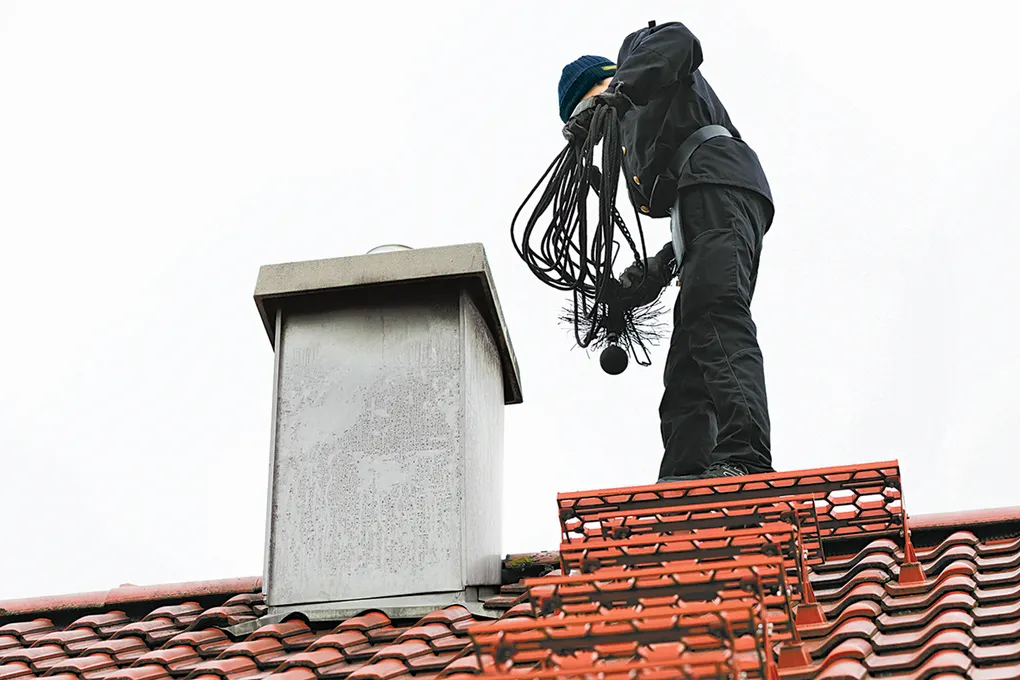
Creosote graded to NFPA 211 Stage 1–3, then swept clean and documented with photos.
Learn moreA nest in the flue is a draft blockage and a carbon-monoxide hazard — combustion gases have nowhere to vent. We locate the obstruction, identify the occupant, and remove birds, raccoons, squirrels, or bats in compliance with Texas wildlife law, then clear and sanitize the nesting material. Because an open flue invites the next occupant, we fit a code-sized cap to close the entry, and confirm the flue draws clear before we leave.
Prices shown are starting estimates and may change with the condition, access, and scope we find on site. Only a written quote from an on-site visit is a price we commit to.
An animal in the chimney is a blocked-flue safety finding before it's a nuisance, and Texas Chimney Experts scopes it that way. We camera the flue to locate the nest, the animal, or a lodged carcass and to confirm the draft obstruction, because nesting debris over a working fireplace is a CO and fire risk, not just noise. The job that follows is the whole protocol — humane, legal removal, sanitation that kills the health risk at the source, and a verified-fit exclusion cap — so the finding is closed for good rather than quieted for a week.
Removal is governed by what the law and the species allow, not just by access. A raccoon, squirrel, or opossum nesting on the smoke shelf is removed humanely — and where the animal is active, a one-way exclusion door lets it leave but not return, then the flue is permanently capped once it's out, rather than trapping it inside the home. Chimney swifts are federally protected, so their nests come out only after the birds have fledged, on the legal timeline. A carcass lodged in the flue is extracted and the smoke chamber deodorized. Knowing and holding to these rules is what separates a professional removal from a pest-panic response.
Sanitation is the step cheap operators skip, and it's where the documented hazard actually lives. Animal droppings carry pathogens; bat guano in particular carries the histoplasmosis risk, and chimney debris from any animal harbors bacteria and odor. Guano and nesting debris are removed under proper PPE and HEPA containment where contamination warrants it, then the flue is sanitized and deodorized with a disinfectant fog that kills pathogens and neutralizes smell at the source rather than masking it. A flue that's been "cleared" but not sanitized still smells and still carries a health risk; ours are cleaned to a verified-safe condition.
Exclusion is what makes the fix permanent and verifiable. An open or loose-mesh flue top is a standing invitation, so every wildlife job closes with a properly fitted exclusion cap — mesh tight enough to keep out birds, squirrels, raccoons, and bats, mounted securely so a determined animal can't work it loose. That's the line between a removal that holds and a recurring seasonal callout. We'd rather seal it once, correctly, and document it.
What ties it together is the same standard TCE applies everywhere: do the whole job, not the loud part. Remove the animal humanely and legally, clean and sanitize to kill the health risk and the odor at the source, and exclude so it can't recur. A homeowner who paid for a "removal" and is back to the same scratching next spring didn't get the job done — they got the easy half.
TCE performs wildlife removal and exclusion across the continental US and the four Texas metros, adapting to local species and protected-species timing — which varies by region — while holding one humane, sanitized, sealed-out standard. The removal, the sanitizing, and the installed exclusion cap are all documented.
Most wildlife jobs close in a single visit unless protected-species timing or heavy guano contamination forces staging. We protect the home, contain the mess, sanitize the flue, and cap it. What's left is a quiet, clean, sealed chimney — and the verified assurance it won't be a nesting site again.
If something has moved into your chimney, the answer isn't a trap and a hope. It's humane removal, verified sanitation, and a permanent, documented cap.
At Texas Chimney Experts, a chimney nest removal is never guesswork. We scope every job from a graded, photographed inspection first — the NFPA 211 level the evidence calls for — so the work is matched to what your flue and masonry actually need, with the report to prove it. The documented inspection is the record the chimney nest removal is built on.
Chimney inspectionScope the flue to locate the nest and any animals.
Clear nest + debris humanely and safely.
Full sweep to remove residual material and odor.
Install an animal-proof cap so it doesn't recur.
We've worked on 1,000+ DFW homes over 10+ years. Every job — small sweep or full rebuild — runs the same way: certified technicians, written quotes, photo reports, warranty in writing.
Humane removal practices
Sweep + cap so they can't return
Aware of protected-species timing (chimney swifts)
Full debris cleanout, not just the visible nest
Family-owned, CSIA-certified, NFPA 211–compliant. We're the team you call when you want it done right the first time — no rotating subcontractors, no upsell pressure, no surprises. Same techs, same trucks, same standard.
The standard is condition-driven, not calendar-driven: NFPA 211 ties cleaning to a measured 1/8" of creosote accumulation, and a Level 1 inspection is the way we confirm you've reached it. For a wood-burning fireplace in regular use that typically lands at once per heating season — but we measure the buildup and tell you what the flue actually shows rather than assuming.
Yes — and verifiably so. Our inspectors hold current CSIA (Chimney Safety Institute of America) certifications you can confirm yourself in the CSIA member directory at csia.org, and our fireplace work is handled by NFI specialists. We name the standard we inspect to so you can check the credential behind the report.
Yes. We respond 24/7 (subject to crew availability) to the situations that can't wait for a diagnosis later — an active water leak into the home, an animal trapped in the flue, post-fire hazards, and storm damage. We make the system safe first, then document the cause; same-day in most cases.
Always — and with the evidence attached. Before any work starts you receive a written quote backed by photos of exactly what we found and why it needs attention. Final pricing follows the documented condition of the chimney and anything the inspection turns up, not a number guessed before we've looked.
Flue Watch is our annual maintenance plan at $19.99/month ($240/year): a documented Level 1 inspection and sweep every year ($248 value), priority scheduling, 10% off all repairs, and emergency-response priority. It's the way to keep a year-over-year record of your system's condition. Cancel anytime, no contract.
Last reviewed:
Other services in the Cleaning category.
Free written quote. Same-week scheduling. 24/7 emergency response when you need it.
Active leak, animal in flue, post-fire damage, or smoke event? Real humans on the line 7 AM to 12 AM every day — replies in under 2 minutes. Tech dispatch within 2 hours during business hours, subject to crew availability after-hours.
Emergency line