
Chimney Cap
Flue termination measured, then a stainless or copper cap fitted to NFPA 211.
Learn moreA new flue — clay tile, steel, or cast-in-place — is permitted, code-inspected work, and the sizing is the part that has to be right: the flue is calculated to the appliance's fuel and the chimney's height before any material goes in. We build to IRC and NFPA 211, pull the permit, and carry the job through municipal final inspection. That third-party sign-off, plus our own documentation, is the verification — a flue proven to code, not merely installed.
Prices shown are starting estimates and may change with the condition, access, and scope we find on site. Only a written quote from an on-site visit is a price we commit to.
Flue installation answers a different question than relining. Not 'what failed and how do we replace it,' but 'this chimney or appliance has no proper flue yet — how do we build the right one from nothing.' Three situations land here: a chimney going up in new construction, an appliance added where no vent path serves it, and an old unlined masonry stack burned for years with no liner that finally needs one. Where relining replaces a cracked or spalled liner that exists, flue installation creates the channel where none was ever present — so there's nothing to scope for failure, only an empty or unlined flue to specify and fit to code.
Starting from scratch puts the design work ahead of any material being set. In new construction the flue is laid out with the masons — clay tile bedded square and plumb, or a stainless system in a framed chase — sized to the appliance outlet, the heat output, and the chimney height against the NFPA 211 venting tables and the appliance listing, so it's right the first time rather than corrected later. An unlined masonry chimney gets its actual clear inside dimension measured before we choose whether a stainless liner drops in or a cast-in-place poured-masonry flue is formed in place. An added appliance gets a dedicated flue routed, or, where a stack already exists, a connection sized so it neither orphans nor overpowers what's already venting there.
Material and method follow the use, and a first install lets us specify cleanly instead of working around a failure. Clay tile, bedded in the right refractory mortar with the correct expansion allowance, is the traditional choice for a new masonry chimney. A UL-1777 listed stainless system is the standard for lining an unlined stack or venting a modern appliance, with the alloy matched to the fuel — 316Ti for wood, oil, coal, or high-sulfur fuels, the appropriate spec for gas. Where a masonry chimney is unlined and also weak, a cast-in-place liner both lines it and structurally re-stiffens it in one pour. Unlike the flexible-liner service, which retrofits a corrugated liner down an existing offset flue, here we're often building the flue path itself — where a straight, smooth-walled clay or rigid run is the better first-time choice.
A completed install is proof-tested like any flue: a draft test confirms the new flue pulls as designed, a smoke check confirms it's gas-tight, and the UL-1777 listing and NFPA 211 sign-off are documented for the building permit and the certificate of occupancy — a first-time flue is usually inspected as part of the build, not after a failure. That documentation is what lets the inspector pass a brand-new flue without ambiguity. The same sizing, material-selection, and verification discipline governs every first-time flue across our national network.
At Texas Chimney Experts, a chimney flue installation is never guesswork. We scope every job from a graded, photographed inspection first — the NFPA 211 level the evidence calls for — so the work is matched to what your flue and masonry actually need, with the report to prove it. The documented inspection is the record the chimney flue installation is built on.
Chimney inspectionA chimney flue installation isn't a matter of opinion — it's held to published national standards. Texas Chimney builds every job to the named codes below and documents it, so the work is provably right for an inspector, an insurer, or a future buyer. These are the universal standards; your city's permit and inspection requirements are confirmed with the local authority before we pull the job.
A first-time flue built as a metal or cast liner has to be a UL-1777 listed system, with the listing documented for the building permit and the inspection; improvised pipe pushed down an unlined stack does not qualify.
We calculate the flue dimensions from the appliance outlet, the heat output, and the chimney height, checked against the NFPA 211 venting tables and the appliance listing. Sizing done right at install is the difference between a brand-new flue that drafts properly and one that drafts poorly from day one.
Refractory mortar bedding, a plumb set, and the expansion allowance NFPA 211 requires are the three details that keep a new clay-tile flue from cracking on its first heat cycle after the masons' first-time install.
Clearance to combustibles is designed into the new flue from the first course, never retrofitted. Interior masonry holds 2 in, exterior holds 1 in per the IRC, and a factory-built chimney holds whatever its listing specifies.
Codes cited are the established national standards (NFPA, UL, IRC) that govern this service. The adopted code edition, permit, and inspection requirements vary by city —Texas Chimney verifies them with your local authority having jurisdiction on every job.
Before a single component is set, the new flue path is laid out and sized against the appliance, the fuel, and the chimney height.
Pick clay tile, rigid stainless, or cast-in-place for a flue set right the first time.
Bed, brace, and seal the new flue to code as the chimney or chase goes up or gets lined.
Draft test plus the paperwork the building permit and inspection require.
We've worked on 1,000+ DFW homes over 10+ years. Every job — small sweep or full rebuild — runs the same way: certified technicians, written quotes, photo reports, warranty in writing.
The first flue planned alongside your builder or mason, sized correctly from day one
Clay tile, rigid stainless, or cast-in-place, specified to the appliance and fuel rather than reached for as a shortcut
UL-listed materials for wood, gas, or oil
Permit- and certificate-of-occupancy-ready documentation
Family-owned, CSIA-certified, NFPA 211–compliant. We're the team you call when you want it done right the first time — no rotating subcontractors, no upsell pressure, no surprises. Same techs, same trucks, same standard.
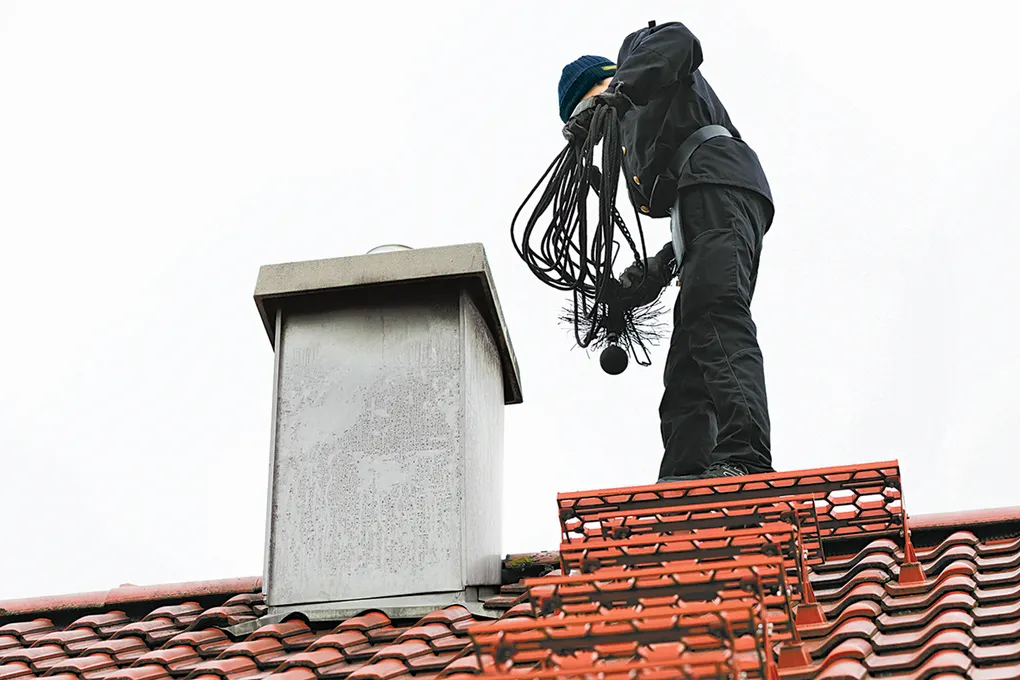
The standard is condition-driven, not calendar-driven: NFPA 211 ties cleaning to a measured 1/8" of creosote accumulation, and a Level 1 inspection is the way we confirm you've reached it. For a wood-burning fireplace in regular use that typically lands at once per heating season — but we measure the buildup and tell you what the flue actually shows rather than assuming.
Yes — and verifiably so. Our inspectors hold current CSIA (Chimney Safety Institute of America) certifications you can confirm yourself in the CSIA member directory at csia.org, and our fireplace work is handled by NFI specialists. We name the standard we inspect to so you can check the credential behind the report.
Yes. We respond 24/7 (subject to crew availability) to the situations that can't wait for a diagnosis later — an active water leak into the home, an animal trapped in the flue, post-fire hazards, and storm damage. We make the system safe first, then document the cause; same-day in most cases.
Always — and with the evidence attached. Before any work starts you receive a written quote backed by photos of exactly what we found and why it needs attention. Final pricing follows the documented condition of the chimney and anything the inspection turns up, not a number guessed before we've looked.
Flue Watch is our annual maintenance plan at $19.99/month ($240/year): a documented Level 1 inspection and sweep every year ($248 value), priority scheduling, 10% off all repairs, and emergency-response priority. It's the way to keep a year-over-year record of your system's condition. Cancel anytime, no contract.
Last reviewed:
Other services in the Installation category.
Free written quote. Same-week scheduling. 24/7 emergency response when you need it.
Active leak, animal in flue, post-fire damage, or smoke event? Real humans on the line 7 AM to 12 AM every day — replies in under 2 minutes. Tech dispatch within 2 hours during business hours, subject to crew availability after-hours.
Emergency line