
Full Chimney Removal to Foundation
Cap-to-footing removal as sequenced engineering, with gas pressure-tested and a documented job package.
Learn moreWhen the stack above the roof is spalling apart, leaving it is the hazard — falling masonry and an open water path. We take it down course by course to the deck, rigged rather than dropped, then rebuild the roof line as a complete assembly: decking let into the framing, ice-and-water underlayment, matched shingles, and the truncated flue capped and abandoned. The finished roof patch is water-tested before we leave, so the closed opening is proven, not just shingled over.
Prices shown are starting estimates and may change with the condition, access, and scope we find on site. Only a written quote from an on-site visit is a price we commit to.
When a masonry stack above the roof has reached the end of its life — spalling brick, a failed crown, a lean you can see from the curb — the sound move isn't another patch. It's a clean cut-down to the roof deck and a roof line restored so a buyer's inspector would never guess a chimney once stood there. A removal gets the same craftsmanship standard we bring to a new build; the difference is in everything you don't see afterward.
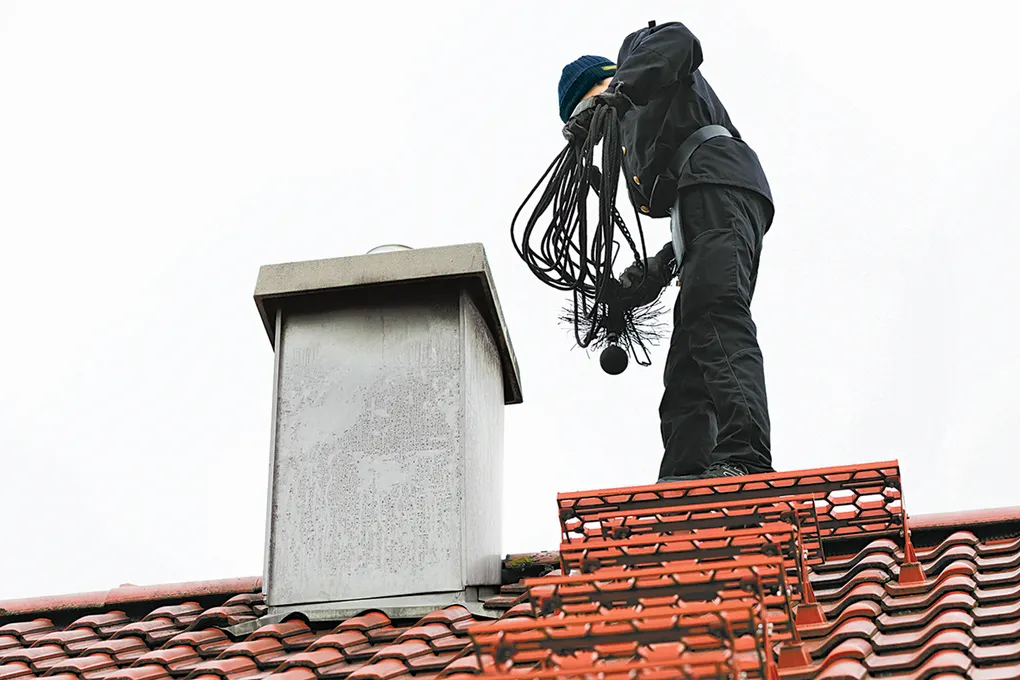
The crew dismantles only the section above the sheathing, course by course, lowering material by hand or rigged line rather than dropping it — protecting your shingles, landscaping, and the people below. A controlled teardown is the difference between a tidy job site and a damaged roof; a stack is never shotgunned, and scaffold or roof anchors and fall-protection go up before a single brick moves.
Where the chimney passed through, the roof is rebuilt as a roofer would. New decking is let into the existing framing, ice-and-water underlayment run over the patch, and the field shingled with a matched product so the repair disappears into the plane. Every penetration is properly flashed, the cut-down flue capped, and the abandoned cavity back-filled to stop condensation and keep critters out. A discount crew leaves a flat tar smear and a soft spot that telegraphs through the shingles within a season; the underlayment lap is photographed before it's covered and the patch water-tested before we leave.
Where the lower chase or breast is staying, its support is engineered — gallows brackets or a framed bulkhead — so nothing upstairs is left hanging on removed masonry. Reclaimed brick is salvaged and palletized if you want to keep it, every bit of rubble hauled off-site, and a documented job package handed over. You're left with a clean roof, a sealed cavity, and a removal that's permitted and on the record — not a liability that surfaces at resale.
At Texas Chimney Experts, a above-roofline chimney removal is never guesswork. We scope every job from a graded, photographed inspection first — the NFPA 211 level the evidence calls for — so the work is matched to what your flue and masonry actually need, with the report to prove it. The documented inspection is the record the above-roofline chimney removal is built on.
Chimney inspectionScaffold or roof anchors and fall-protection go up, and the roof and landscaping get tarped before a single brick moves.
Masonry is dismantled course-by-course down to the sheathing, then lowered by hand or on a rigged line.
New decking is let into the framing, ice-and-water underlayment runs beneath matched shingles, and the underlayment is photographed before it is covered.
The cut-down flue gets capped, the cavity back-filled, and the patch water-tested; brick is salvaged and rubble hauled off.
We've worked on 1,000+ DFW homes over 10+ years. Every job — small sweep or full rebuild — runs the same way: certified technicians, written quotes, photo reports, warranty in writing.
A controlled course-by-course teardown, with masonry rigged and lowered rather than dropped.
The roof patched to an invisible standard, then photographed and water-tested.
The truncated flue capped and the abandoned cavity back-filled against moisture and pests.
Permitted, inspected, and documented so the work holds up when the house sells.
Family-owned, CSIA-certified, NFPA 211–compliant. We're the team you call when you want it done right the first time — no rotating subcontractors, no upsell pressure, no surprises. Same techs, same trucks, same standard.
The standard is condition-driven, not calendar-driven: NFPA 211 ties cleaning to a measured 1/8" of creosote accumulation, and a Level 1 inspection is the way we confirm you've reached it. For a wood-burning fireplace in regular use that typically lands at once per heating season — but we measure the buildup and tell you what the flue actually shows rather than assuming.
Yes — and verifiably so. Our inspectors hold current CSIA (Chimney Safety Institute of America) certifications you can confirm yourself in the CSIA member directory at csia.org, and our fireplace work is handled by NFI specialists. We name the standard we inspect to so you can check the credential behind the report.
Yes. We respond 24/7 (subject to crew availability) to the situations that can't wait for a diagnosis later — an active water leak into the home, an animal trapped in the flue, post-fire hazards, and storm damage. We make the system safe first, then document the cause; same-day in most cases.
Always — and with the evidence attached. Before any work starts you receive a written quote backed by photos of exactly what we found and why it needs attention. Final pricing follows the documented condition of the chimney and anything the inspection turns up, not a number guessed before we've looked.
Flue Watch is our annual maintenance plan at $19.99/month ($240/year): a documented Level 1 inspection and sweep every year ($248 value), priority scheduling, 10% off all repairs, and emergency-response priority. It's the way to keep a year-over-year record of your system's condition. Cancel anytime, no contract.
Last reviewed:
Other services in the Removal & Decommission category.
Free written quote. Same-week scheduling. 24/7 emergency response when you need it.
Active leak, animal in flue, post-fire damage, or smoke event? Real humans on the line 7 AM to 12 AM every day — replies in under 2 minutes. Tech dispatch within 2 hours during business hours, subject to crew availability after-hours.
Emergency line