
Electric Fireplace Repair
Diagnosed to the failed component, repaired, wiring safety-checked, then full cycle-tested.
Learn moreAdding a pilot system to a manual gas set is only a safety upgrade if the flame-proving interlock is wired correctly — otherwise it's a hazard with a switch. We fit a standing-pilot or electronic-ignition assembly, set the thermocouple or thermopile, and wire the main-valve interlock so gas cannot flow without a proven flame. The interlock is tested through ignition and the connection leak-checked per IFGC before sign-off, so the safety function is verified, not assumed.
Prices shown are starting estimates and may change with the condition, access, and scope we find on site. Only a written quote from an on-site visit is a price we commit to.
This service adds an ignition system to a fireplace that lacks a functioning one — a different job from fixing a failed part, because it's choosing and building the way the appliance will light. Pilot ignition is installed as a system: the pilot burner, the proving circuit, the igniter, and the interlock that ties them to the gas valve, selected and assembled to work together from the start. The standard held in one metro is the standard held in all of them.
Set against pilot-assembly-replacement, the line is clean: that service swaps a specific failed part on an ignition system that already exists and used to work — your fireplace had a pilot, it dropped out, the dead component is replaced. This service is for the case where there's no working ignition to repair: a unit built without one, one whose pilot was removed, or one getting a new ignition architecture entirely. Replacement renews; installation builds. The tell is simple — if there's nothing there to swap, this is the right service.
The first real decision is the architecture, because the two systems behave differently and the choice is permanent until the next conversion. A standing pilot burns a small flame continuously — a few dollars of gas a month, but simple, and crucially it still lights during a power outage because its thermopile generates its own millivolts. An electronic (intermittent pilot ignition, IPI) system sparks a pilot only on demand, saving that standing fuel, but it generally needs household power or a battery backup to fire. That trade-off is walked through against how you actually use the fireplace — outage operation, fuel cost, convenience — and the system sized to the answer rather than to whatever box is on the shelf.
Building the system means building the flame-proving interlock from scratch, and that's the safety core of the whole job. The proving circuit — thermocouple on a standing pilot, thermopile or flame-sense rod on an electronic system — is what tells the gas valve a flame is actually present; without a correctly built and aimed prove circuit, the valve has no way to know whether gas is burning or just flowing. The pilot is mounted so its flame fully envelops the sensor, the thermocouple/thermopile or igniter and module matched to the appliance valve, and the interlock wired so the valve can't hold gas open unless the flame proves. An electronic install also sets up the power or battery backup and the ignition module the architecture requires.
Because this is new ignition hardware tied into a live fuel train, the components must be matched and the whole thing commissioned, not just lit once. The valve is confirmed to accept the chosen ignition (some older millivolt valves can't take an IPI retrofit and would themselves need replacement — a boundary flagged before quoting), the pilot flame set for reliable, clean light-off, the gas connection leak-tested by manometer and bubble soap, and an ambient CO check run. Then it's lit repeatedly to confirm the new system proves and holds every time, not just on the first try.
The job closes by handing you a system you understand: how this ignition lights, what it does in an outage, and what its standing cost or battery upkeep is. Documented service here isn't a flame got going once — it's an ignition system designed for how you live with the fireplace, built to prove safe, and explained so you're never guessing why it did or didn't light.
At Texas Chimney Experts, a pilot light installation is never guesswork. We scope every job from a graded, photographed inspection first — the NFPA 211 level the evidence calls for — so the work is matched to what your flue and masonry actually need, with the report to prove it. The documented inspection is the record the pilot light installation is built on.
Chimney inspectionA pilot light installation isn't a matter of opinion — it's held to published national standards. Texas Chimney builds every job to the named codes below and documents it, so the work is provably right for an inspector, an insurer, or a future buyer. These are the universal standards; your city's permit and inspection requirements are confirmed with the local authority before we pull the job.
The NFPA 54 National Fuel Gas Code governs all pilot and gas-train work, and no appliance returns to service until the connection passes both a manometer test and a bubble-soap leak check.
At the heart of the install sits one interlock: gas shuts off the moment the flame fails. Whether the proving circuit uses a thermocouple, thermopile, or flame-sense rod, it is assembled so the gas valve physically cannot hold open without a proven flame.
Compatibility between the ignition, the appliance valve, and the fuel is verified first. When a valve cannot accept an electronic retrofit, the job is flagged for valve replacement instead of forcing the mismatch.
An ambient CO reading verifies combustion is safe once the new ignition system is set and proven.
Codes cited are the established national standards (NFPA, UL, IRC) that govern this service. The adopted code edition, permit, and inspection requirements vary by city —Texas Chimney verifies them with your local authority having jurisdiction on every job.
Select standing vs. electronic for your use and valve.
Assemble the pilot, proving circuit, and igniter so they work as one matched system.
Wire the flame-proving interlock and any backup power.
Dial in the flame, run leak and CO tests, and prove reliable light-off on repeat cycles.
We've worked on 1,000+ DFW homes over 10+ years. Every job — small sweep or full rebuild — runs the same way: certified technicians, written quotes, photo reports, warranty in writing.
Builds ignition where none works — not a part swap
Standing-pilot or electronic ignition selected around how you actually use the fireplace
Flame-proving interlock wired and matched from scratch
Outage behavior and running cost explained up front
Family-owned, CSIA-certified, NFPA 211–compliant. We're the team you call when you want it done right the first time — no rotating subcontractors, no upsell pressure, no surprises. Same techs, same trucks, same standard.
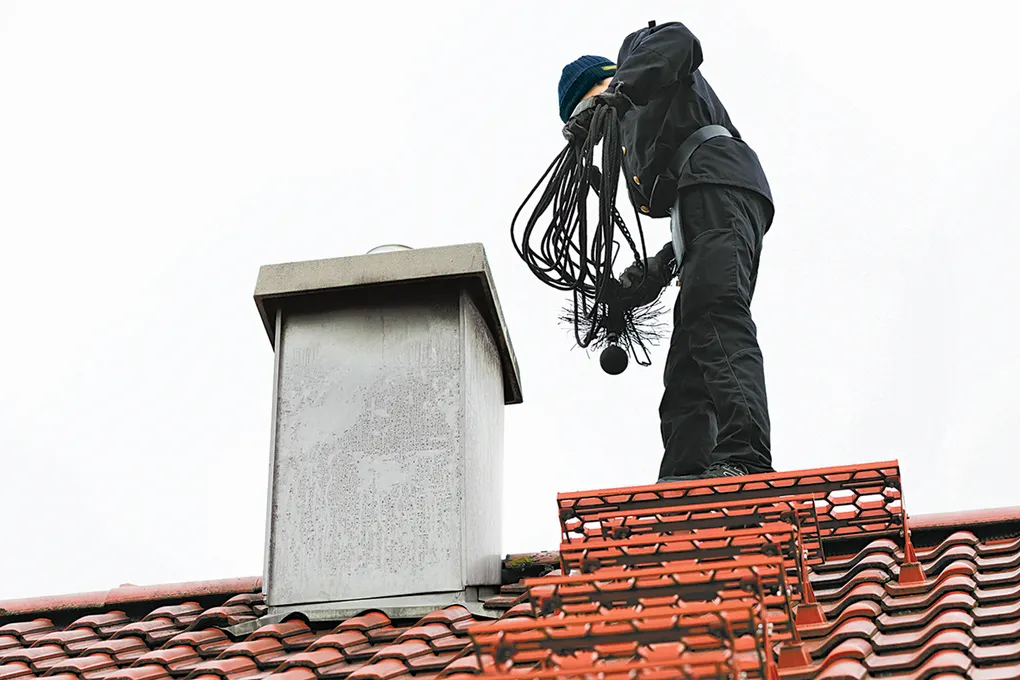
The standard is condition-driven, not calendar-driven: NFPA 211 ties cleaning to a measured 1/8" of creosote accumulation, and a Level 1 inspection is the way we confirm you've reached it. For a wood-burning fireplace in regular use that typically lands at once per heating season — but we measure the buildup and tell you what the flue actually shows rather than assuming.
Yes — and verifiably so. Our inspectors hold current CSIA (Chimney Safety Institute of America) certifications you can confirm yourself in the CSIA member directory at csia.org, and our fireplace work is handled by NFI specialists. We name the standard we inspect to so you can check the credential behind the report.
Yes. We respond 24/7 (subject to crew availability) to the situations that can't wait for a diagnosis later — an active water leak into the home, an animal trapped in the flue, post-fire hazards, and storm damage. We make the system safe first, then document the cause; same-day in most cases.
Always — and with the evidence attached. Before any work starts you receive a written quote backed by photos of exactly what we found and why it needs attention. Final pricing follows the documented condition of the chimney and anything the inspection turns up, not a number guessed before we've looked.
Flue Watch is our annual maintenance plan at $19.99/month ($240/year): a documented Level 1 inspection and sweep every year ($248 value), priority scheduling, 10% off all repairs, and emergency-response priority. It's the way to keep a year-over-year record of your system's condition. Cancel anytime, no contract.
Last reviewed:
Other services in the Gas & Fireplace category.
Free written quote. Same-week scheduling. 24/7 emergency response when you need it.
Active leak, animal in flue, post-fire damage, or smoke event? Real humans on the line 7 AM to 12 AM every day — replies in under 2 minutes. Tech dispatch within 2 hours during business hours, subject to crew availability after-hours.
Emergency line