Emergency Storm Board-Up & Weather Seal
After-hours dispatch to stop the breach, then a documented assessment and permanent repair.
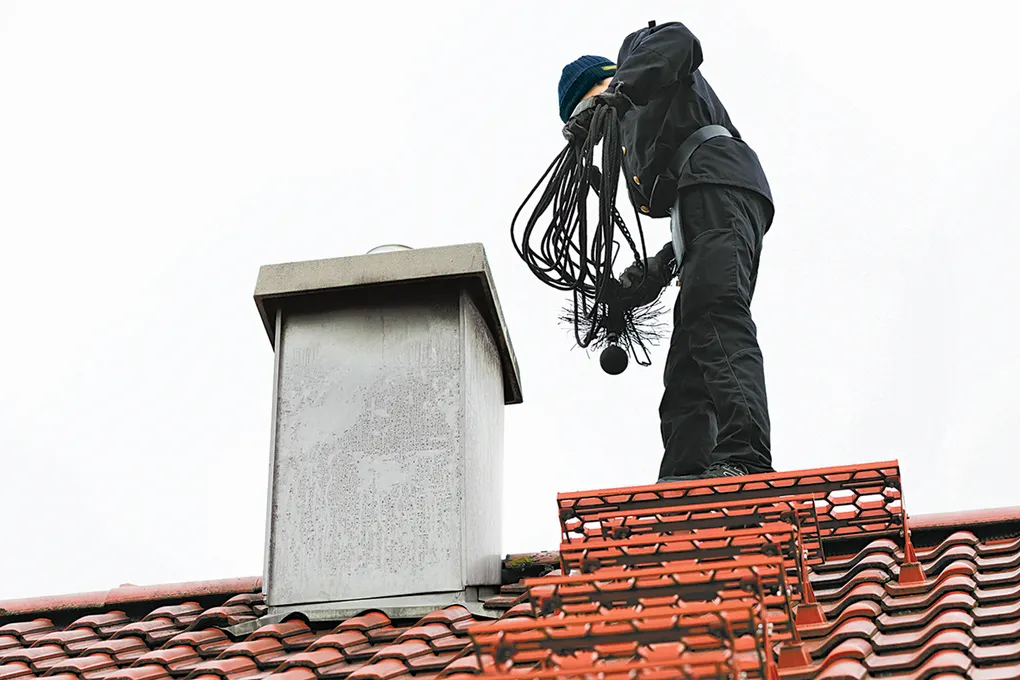
Learn moreSmoke rolling back into the room is combustion products — including carbon monoxide — with nowhere to go but your living space, so this is a same-day safety call. We locate the obstruction precisely with a push-camera CCTV scan rather than guessing: nest, debris, collapsed liner, or a cold-flue draft reversal. After clearing it, the flue is confirmed to draft and CO-checked where warranted before we leave, and the cause is diagnosed so the permanent fix — cap, reline, or draft correction — answers the real problem.
Prices shown are starting estimates and may change with the condition, access, and scope we find on site. Only a written quote from an on-site visit is a price we commit to.
When you light a fire and smoke rolls back into the room — or worse, the house fills with smoke from a blocked flue — that's an emergency, not an inconvenience. A fully blocked chimney means combustion products, including carbon monoxide, have nowhere to go but into your living space. The response is fast: clear the active blockage and smoke-back, find the real cause, and confirm the chimney drafts safely before we leave.
A flue that suddenly backs smoke into the home is blocked or has lost its draft. The usual culprits are an animal nest packed into the flue, a collapsed liner, heavy debris, or a cold-air plug in an exterior chimney that reverses the draft on lightoff. Each is a different fix, and clearing the wrong thing wastes time while the house fills with smoke. The diagnosis is fast — often a push-camera (CCTV) scan to locate the obstruction or breach precisely — then it's cleared: the nest or debris extracted, a collapsed liner addressed, or a cold-flue plug broken and draft re-established.
The safety stakes make competence non-negotiable. A blocked flue spilling combustion gas into the home is a carbon monoxide hazard, so the response confirms the flue actually drafts after clearing — not just that the visible smoke stopped. Draft is verified and, where the situation warrants, CO checked, so you know the air is safe, not just clearer. An emergency clear that doesn't confirm safe drafting is incomplete.
Some smoke-back isn't a blockage at all but a draft-establishment problem — a cold exterior flue with a stack-effect reversal that dumps smoke into the room every time you light it cold — which needs priming technique, not a brushing. And a fireplace that smokes because the opening is too large for the flue needs a smoke-guard or opening reducer. After the immediate problem is cleared and safe draft confirmed, the cause and the permanent fix are named — an exclusion cap so the nest doesn't return, a reline if the liner collapsed, a draft correction if it's a cold-flue or sizing issue.
At Texas Chimney Experts, a emergency smoke-back & flue-blockage clearing is never guesswork. We scope every job from a graded, photographed inspection first — the NFPA 211 level the evidence calls for — so the work is matched to what your flue and masonry actually need, with the report to prove it. The documented inspection is the record the emergency smoke-back & flue-blockage clearing is built on.
Chimney inspectionA emergency smoke-back & flue-blockage clearing isn't a matter of opinion — it's held to published national standards. Texas Chimney builds every job to the named codes below and documents it, so the work is provably right for an inspector, an insurer, or a future buyer. These are the universal standards; your city's permit and inspection requirements are confirmed with the local authority before we pull the job.
Stopping the visible smoke is not verification: a blocked flue spilling combustion gas is a CO hazard, so the flue's draft is confirmed after clearing and CO is checked where warranted.
When cold-flue smoke-back keeps recurring, overall flue height is measured against the 3-2-10 termination rule, since a flue that runs too short drafts weakly on a cold lightoff.
Codes cited are the established national standards (NFPA, UL, IRC) that govern this service. The adopted code edition, permit, and inspection requirements vary by city —Texas Chimney verifies them with your local authority having jurisdiction on every job.
Get out fast and run a push-camera scan to pinpoint the obstruction or breach.
Whether the blockage is a nest, loose debris, a collapsed liner, or a cold-flue plug, we clear it and re-establish draft.
Confirm the flue is actually drafting, and check for CO where warranted, before leaving.
Name the cause and the fix that lasts: an exclusion cap, a reline, a smoke-guard, or a draft correction.
We've worked on 1,000+ DFW homes over 10+ years. Every job — small sweep or full rebuild — runs the same way: certified technicians, written quotes, photo reports, warranty in writing.
Fast response so you stop lighting fires that are pushing combustion gas back into the house
A push-camera (CCTV) scan that pinpoints exactly where the blockage or breach sits
Confirmed safe draft, with a CO check where the situation warrants it, before we go
The cause identified and the permanent fix named, whether that is a cap, a reline, or a draft correction
Family-owned, CSIA-certified, NFPA 211–compliant. We're the team you call when you want it done right the first time — no rotating subcontractors, no upsell pressure, no surprises. Same techs, same trucks, same standard.
The standard is condition-driven, not calendar-driven: NFPA 211 ties cleaning to a measured 1/8" of creosote accumulation, and a Level 1 inspection is the way we confirm you've reached it. For a wood-burning fireplace in regular use that typically lands at once per heating season — but we measure the buildup and tell you what the flue actually shows rather than assuming.
Yes — and verifiably so. Our inspectors hold current CSIA (Chimney Safety Institute of America) certifications you can confirm yourself in the CSIA member directory at csia.org, and our fireplace work is handled by NFI specialists. We name the standard we inspect to so you can check the credential behind the report.
Yes. We respond 24/7 (subject to crew availability) to the situations that can't wait for a diagnosis later — an active water leak into the home, an animal trapped in the flue, post-fire hazards, and storm damage. We make the system safe first, then document the cause; same-day in most cases.
Always — and with the evidence attached. Before any work starts you receive a written quote backed by photos of exactly what we found and why it needs attention. Final pricing follows the documented condition of the chimney and anything the inspection turns up, not a number guessed before we've looked.
Flue Watch is our annual maintenance plan at $19.99/month ($240/year): a documented Level 1 inspection and sweep every year ($248 value), priority scheduling, 10% off all repairs, and emergency-response priority. It's the way to keep a year-over-year record of your system's condition. Cancel anytime, no contract.
Last reviewed:
Other services in the Emergency / 24-7 category.
Free written quote. Same-week scheduling. 24/7 emergency response when you need it.
Active leak, animal in flue, post-fire damage, or smoke event? Real humans on the line 7 AM to 12 AM every day — replies in under 2 minutes. Tech dispatch within 2 hours during business hours, subject to crew availability after-hours.
Emergency line